

Egg Freezing (Oocyte Cryopreservation) at American Reproductive Centers (ARC)
Your fertility, on your timeline. Preserve your options for the future.
Egg freezing is a proven medical technology that preserves your eggs at their current age and quality, giving you control over when you start a family. Whether you’re focusing on your career, pursuing educational goals, haven’t found the right partner yet, or need to protect your fertility before medical treatment, egg freezing offers you flexibility and peace of mind.
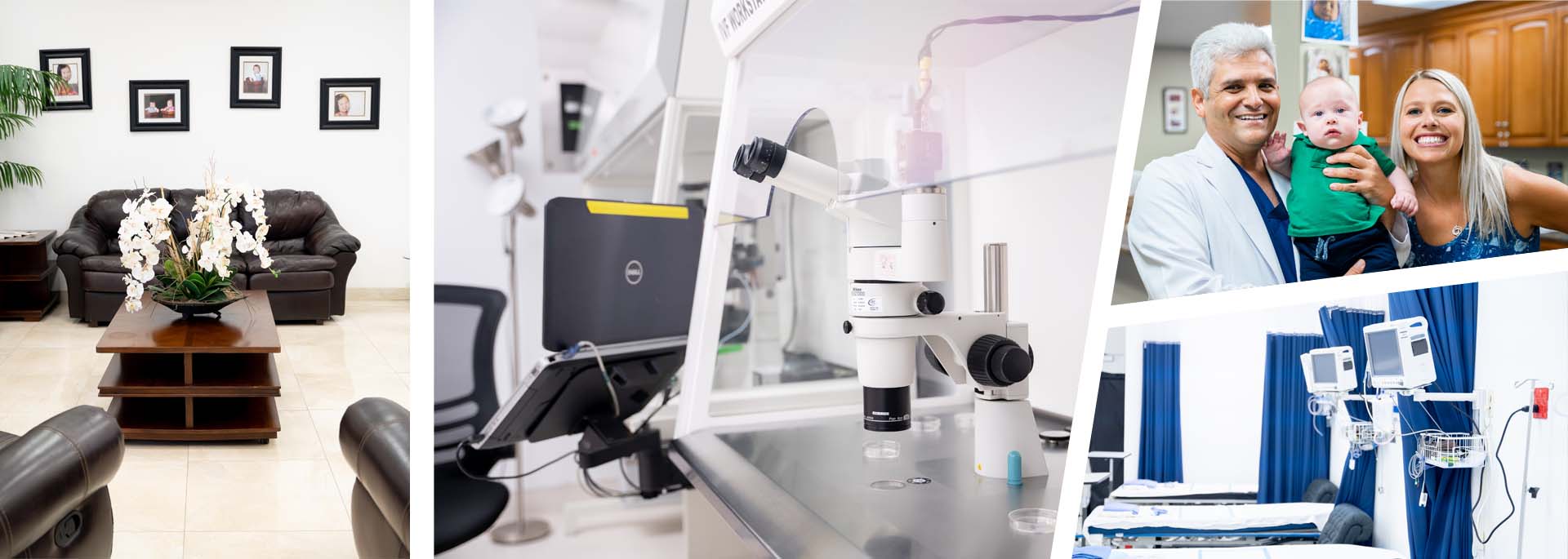
At American Reproductive Centers, we use vitrification, an advanced flash-freezing technique with egg survival rates above 95%. This is a safe, well-established procedure performed thousands of times each year across the country. Our experienced team and state-of-the-art laboratory ensure your eggs are preserved with the highest level of care.
What Is Egg Freezing?
Egg freezing, medically known as oocyte cryopreservation, is the process of retrieving your eggs, freezing them using advanced technology, and storing them safely for future use. When you’re ready to build your family, the eggs are thawed, fertilized with sperm from a partner or donor, and transferred to your uterus as embryos.
The key to successful egg freezing is vitrification, a flash-freezing method that prevents ice crystals from forming inside the egg. Ice crystals can damage the delicate cellular structure of eggs, but vitrification freezes them so quickly that the water inside turns into a glass-like state instead. This technology has revolutionized egg freezing, with survival rates now consistently above 95% when eggs are thawed. Older slow-freeze methods resulted in significant egg damage and are no longer used.
Here’s what matters most: Egg freezing captures your fertility at a specific point in time. If you freeze eggs at age 32, they retain the reproductive potential of a 32-year-old, even if you use them at age 40. Your eggs don’t age in the freezer. This means freezing eggs when you’re younger gives you better odds of success later.
Is Egg Freezing for You? Consider the Reasons.
- If you know you want a family, but you are not ready yet.
- If you have an ethical or religious objection to freezing embryos, you can choose egg freezing because it only involves storing unfertilized eggs.
- If you have a family history of premature ovarian failure
- If you are an active-duty military member, egg freezing provides peace of mind when you are deployed for service.
How the Egg Freezing Process Works at ARC
Step 1: Initial Consultation and Fertility Assessment
Your egg freezing journey begins with a comprehensive consultation with one of our fertility specialists. During this visit, we discuss your goals, medical history, lifestyle, and timeline. We want to understand what matters most to you so we can create a personalized treatment plan.
You’ll undergo fertility testing to assess your ovarian reserve, which tells us approximately how many eggs you have remaining. This includes:
Blood tests to measure hormone levels, including AMH (anti-Müllerian hormone), FSH (follicle-stimulating hormone), and estradiol. These hormones indicate your egg supply and how your ovaries are likely to respond to stimulation medications.
Transvaginal ultrasound to count your antral follicles, which are the small fluid-filled sacs containing immature eggs. This count, combined with your blood work, helps us predict how many eggs we can retrieve in one cycle.
Based on your test results and age, we’ll discuss realistic expectations for your egg freezing cycle, including how many eggs we aim to retrieve and whether you might need more than one cycle to reach your goals.
Step 2: Ovarian Stimulation
Once you’re ready to begin, you’ll start taking fertility medications to stimulate your ovaries to produce multiple mature eggs in a single cycle. Normally, your body releases just one egg per month. The medications override this natural process so you can produce 10 to 20 or more eggs at once.
You’ll give yourself daily hormone injections for approximately 10 to 12 days. These are the same medications used in IVF cycles. Most patients learn to do the injections easily at home. The needles are small, and our nursing team will teach you exactly how to prepare and administer each medication.
Monitoring appointments happen every few days during your stimulation. These quick visits include blood tests to check your hormone levels and ultrasounds to see how your follicles are growing. We use this information to adjust your medication doses and determine the optimal time for your egg retrieval. You’ll typically have 3 to 5 monitoring visits during your cycle.
When your follicles reach the right size, usually after 10 to 12 days of medications, you’ll take a trigger shot. This final injection causes your eggs to complete their final maturation stage. Your egg retrieval is scheduled exactly 36 hours after this trigger shot.
Step 3: Egg Retrieval Procedure
The egg retrieval is a minor outpatient procedure that takes about 15 to 20 minutes. You’ll receive IV sedation, so you’ll be completely comfortable and won’t remember the procedure.
Using ultrasound guidance, your doctor inserts a thin needle through the vaginal wall to reach your ovaries. The needle gently aspirates the fluid from each follicle, and the eggs are collected in that fluid. Our embryologist is in the adjacent lab immediately examining the follicular fluid under a microscope to identify and count your eggs.
After the retrieval, you’ll rest in our recovery area for about 30 to 60 minutes while the sedation wears off. You’ll need someone to drive you home. Most patients feel back to normal within a day or two, though some cramping and bloating for a few days is common.
You’ll receive a call from our team later that day with your final mature egg count. This is the number of eggs that were successfully frozen.
Step 4: Vitrification and Freezing
Within hours of your retrieval, our embryologists assess your eggs to determine which ones are mature and ready for freezing. Mature eggs are at the metaphase II stage of development. Only mature eggs survive the freezing and thawing process reliably.
These mature eggs are immediately frozen using vitrification. The entire process happens in our on-site laboratory under strict quality control protocols. Each egg is carefully prepared, placed in a specialized solution, and then plunged into liquid nitrogen at negative 196 degrees Celsius. The freezing happens so rapidly that ice crystals cannot form.
Step 5: Long-Term Storage
Your frozen eggs are stored in secure cryogenic tanks in our laboratory, where they remain in a state of suspended animation. They can stay frozen indefinitely without any deterioration in quality. Eggs frozen 10 or 15 years ago have the same survival rates and potential for pregnancy as eggs frozen last month.
You’ll pay an annual storage fee to maintain your eggs in our facility. We monitor the tanks 24/7 and have backup systems to ensure uninterrupted storage. Your eggs remain your property, and you can decide what to do with them at any time.
How Successful Is Egg Freezing, Really?
Egg freezing success happens in stages, and not every egg becomes a baby. With modern freezing, about 95% of eggs survive thawing, and around 70 to 80% of those fertilize, often using ICSI. From there, roughly 40 to 60% develop into embryos ready for transfer. How many of those embryos are healthy depends mostly on your age when you froze your eggs. Under 35, about half are typically chromosomally normal, while over 40 it is closer to 20 to 30%. Each healthy embryo has about a 60 to 70% chance of resulting in a live birth, which is why freezing eggs at a younger age often leads to better outcomes later, even if you use them years down the line.
Why Choose ARC for Egg Freezing
State-of-the-Art Laboratory
Our embryology lab’s expertise in vitrification is critical to your success. Egg freezing outcomes depend on precise technique, timing, and experience. Our embryologists have frozen and thawed thousands of eggs with consistently high survival rates. We maintain strict quality control protocols and monitor our lab conditions continuously.
Personalized Stimulation Protocols
No two patients are alike. We customize your medication protocol based on your age, ovarian reserve, medical history, and response to medications. Our goal is to maximize the number of high-quality mature eggs you produce in each cycle while keeping you safe and comfortable.
Experienced, Physician-Led Care
Dr. Abdallah personally oversees every aspect of your treatment. You’ll see him at your key appointments, and he performs all egg retrievals himself. You’re not just a number. You receive individualized attention throughout your journey.
Transparent Counseling and Realistic Expectations
We give you honest, evidence-based information about how many eggs you should aim to freeze, what your success rates are likely to be based on your age, and what the entire process will cost. We never make unrealistic promises. Our goal is to ensure you make informed decisions that align with your goals.
Convenient Southern California Location
Located in the Coachella Valley, we serve patients throughout Southern California. Our clinic offers flexible appointment scheduling to accommodate your work and life commitments.
Comprehensive Support
From your first consultation through storage and eventual use of your eggs, our team supports you. Our nurses, financial counselors, and patient coordinators are here to answer questions, provide guidance, and ensure you feel confident and informed.
Frequently Asked Questions
Will the injections and retrieval hurt?
The injections use very small needles, and most patients adjust to them quickly. The retrieval procedure is performed under IV sedation, so you won’t feel any pain during it. Afterward, cramping and bloating are common for a few days, similar to period symptoms. Most patients take one or two days off work and then resume normal activities.
How long can my eggs stay frozen?<br />
Eggs can be stored indefinitely. Vitrification technology preserves them without any degradation over time. Babies have been born from eggs frozen for more than a decade. There’s no evidence that longer storage harms egg quality or pregnancy outcomes.
What are the risks of egg freezing?<br />
Egg freezing is very safe, but like any medical procedure, it carries some risks. The most common side effect is ovarian hyperstimulation syndrome (OHSS), where your ovaries become swollen and uncomfortable. Mild OHSS happens in about 10% of cycles and resolves on its own. Severe OHSS is rare (less than 1%) with modern protocols. Other rare risks include infection, bleeding, or complications from anesthesia. We monitor you closely throughout your cycle to minimize these risks.
Can I get pregnant naturally after egg freezing?
Yes. Egg freezing doesn’t harm your remaining eggs or reduce your future natural fertility. After your retrieval, your ovaries return to their normal function within a few weeks. Many women freeze eggs as a backup plan and then conceive naturally later without ever using their frozen eggs.
Should I do genetic testing on embryos created from my frozen eggs?
Many patients choose PGT-A (preimplantation genetic testing for aneuploidy) to screen embryos for chromosomal abnormalities before transfer. This is especially helpful if you froze eggs at an older age (38 or above) or want to maximize your chances with each transfer. PGT-A reduces miscarriage risk and increases live birth rates per transfer. Your doctor will discuss whether testing makes sense for your situation.
What if I freeze eggs and never use them?
That’s okay. Many women freeze eggs for peace of mind and end up conceiving naturally. If you don’t use your eggs, you can keep them in storage, donate them to another person or couple, donate them to research, or have them discarded. You always maintain control over your eggs.
Can I freeze eggs if I have PCOS, endometriosis, or other conditions?
Yes. Women with PCOS often respond very well to ovarian stimulation and may retrieve a high number of eggs. Endometriosis doesn’t prevent egg freezing, though it may affect your ovarian reserve depending on severity. Other conditions are evaluated on a case-by-case basis. Your fertility specialist will assess your individual situation during your consultation.
What's the best age to freeze my eggs?
The ideal age is in your late 20s to early 30s, when egg quality is highest and you need fewer eggs for good success rates. However, egg freezing can still be beneficial in your mid to late 30s. Even at 38 or 39, freezing eggs now is better than waiting until 41 or 42. The key is freezing sooner rather than later, since egg quality declines with age.
What Happens When You’re Ready to Use Your Frozen Eggs?
When you decide to start your family, your frozen eggs go through the following process:
- Thawing: Your eggs are carefully warmed in the laboratory. This takes just minutes.
- Fertilization: The thawed eggs are fertilized using ICSI, where an embryologist injects one sperm directly into each egg. Sperm can come from a partner or a sperm donor.
- Embryo culture: The fertilized eggs, now embryos, are cultured in the lab for 5 to 6 days until they reach the blastocyst stage.
- Genetic testing (optional): Many patients choose PGT-A testing to identify chromosomally normal embryos, which increases the chance of pregnancy and reduces miscarriage risk.
- Embryo transfer: One healthy embryo is transferred into your uterus during a simple, painless procedure. If you have additional healthy embryos, they can be frozen for future use.
- Pregnancy test: About 10 days after your transfer, you’ll take a blood test to see if you’re pregnant.
Your Partner in Fertility Preservation
Egg freezing is more than a medical decision. It’s a way to protect your options and give yourself time. At American Reproductive Centers, we guide you through every step with a clear plan, expert support, and a lab that consistently delivers high survival and fertilization rates.
You’ll work with a team that understands the emotional and medical weight of this choice. We tailor your stimulation protocol, monitor your progress closely, and use advanced vitrification techniques to freeze your eggs safely and effectively. Our goal is simple. Freeze the best possible eggs today so you have real options tomorrow.
If you’re thinking about protecting your future, now is the right moment to explore your choices.
Ready to preserve your fertility and keep your options open?

Where Success is Measured in Heartbeats!
Our Locations:
1180 N Indian Canyon Dr. Suites 301/303, Palm Springs, CA 92262
1-760-346-4334
255 Terracina Blvd. – Suite 202, Redlands, CA 92373
1-760-346-4334
(An ARC affiliate)
330 S Magnolia Ave suite 201, El Cajon, CA 92020
1-619-768-1110